What Does a Psychosocial Recovery Coach Actually Help With?
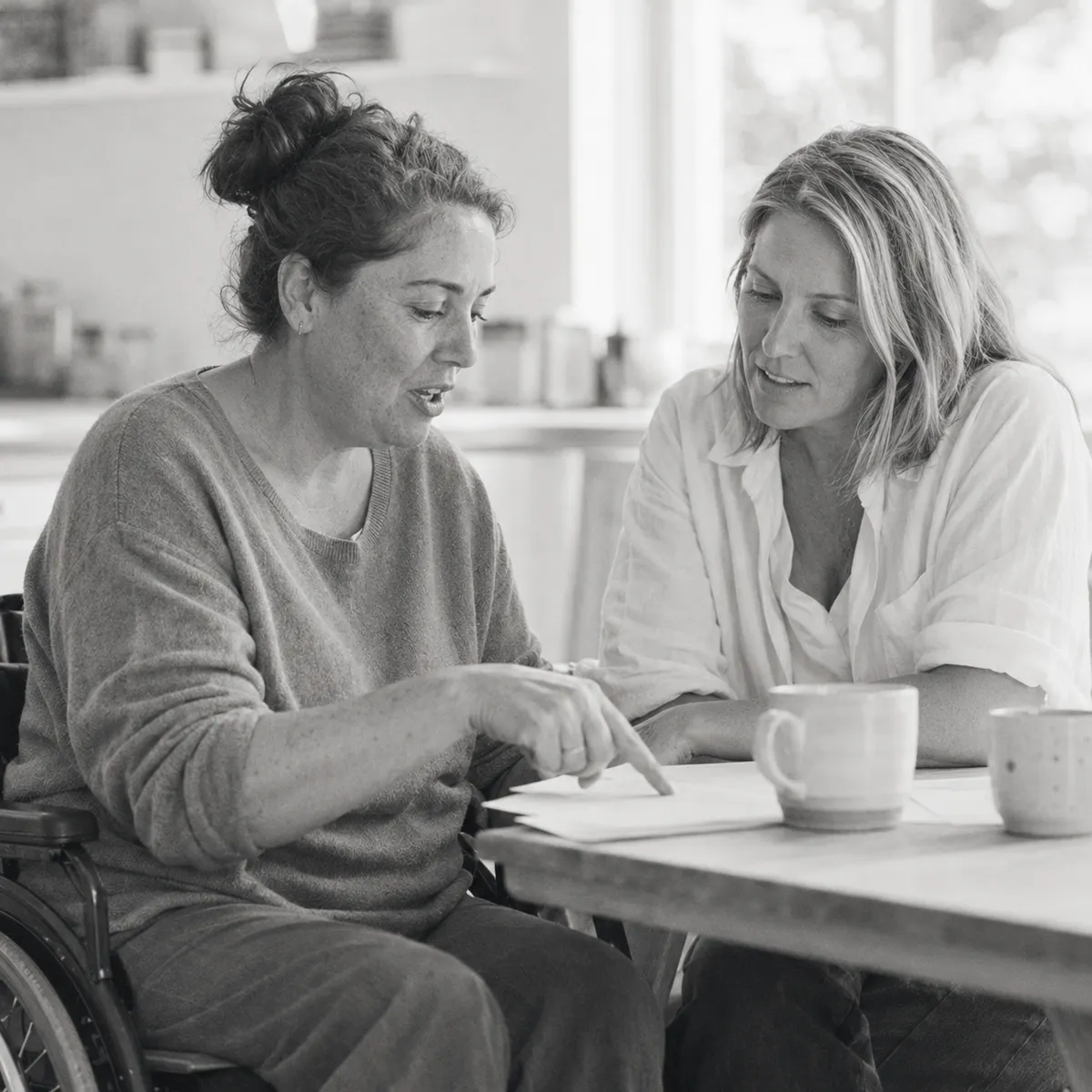
A psychosocial recovery coach works alongside an NDIS participant with psychosocial disability. The role combines practical coordination with recovery-oriented coaching, helping the participant understand their options, organise supports and build confidence in making decisions.
That description can still feel broad. What does working with a recovery coach look like from week to week? The answer depends on the participant, their goals, their circumstances and the funding available in their NDIS plan. It should not be a fixed program that looks the same for everyone.
What is psychosocial recovery coaching?
The NDIS describes a recovery coach as a worker who helps a participant with psychosocial disability in their recovery journey. Recovery coaching aims to increase choice and control, strengthen connections and support greater independence.
Recovery does not have to mean removing every challenge or following a clinical treatment plan. In recovery-oriented practice, it can mean pursuing a purposeful life, building on strengths and making progress towards what matters to the individual. The participant remains the expert in their own life.
A coach should take time to understand the participant's priorities, communication preferences, existing relationships, strengths and support needs. With the participant's consent, this may include working with family members, carers, clinicians, NDIS providers and other important people.
What can a psychosocial recovery coach help with?
Understanding services and available choices
NDIS and mainstream service systems can be difficult to navigate. A recovery coach can explain different types of support in accessible language, help the participant identify questions and discuss the possible advantages or limitations of available options.
The coach can help find and organise suitable supports, but the final decisions belong to the participant. A participant can say no, ask for more information, consider another provider or change direction.
Connecting different supports
A participant may have NDIS providers as well as a GP, mental health professionals, housing contacts or other community and mainstream services. A recovery coach can help these supports communicate and work together when the participant gives permission.
This could involve clarifying who is responsible for a task, helping the participant prepare for a meeting or reducing conflicting information between services. The coach does not take control of every conversation. They can support the participant to speak for themselves or communicate alongside them, depending on what the participant prefers.
Building confidence and decision-making skills
Recovery coaching is not only about arranging services. It can also focus on building the participant's knowledge, confidence and ability to make informed decisions. Practical work might include:
- breaking a complicated decision into smaller steps
- comparing support options without pressuring the participant
- practising questions before a provider meeting
- identifying what helps the participant feel heard and safe
- developing routines for managing appointments or service communication
- learning more about NDIS rights, responsibilities and choices.
The pace should reflect the participant's preferences and current capacity. Some people may want hands-on help at first and gradually take on more tasks. Others may prefer the coach to remain closely involved in selected areas.
Planning for times when more support may be needed
Psychosocial support needs can change over time. A recovery coach can collaborate with the participant to think ahead about what helps during periods of increased stress or reduced capacity.
This may include recording communication preferences, identifying trusted contacts and agreeing on practical steps for staying connected with supports. It is not a substitute for clinical care or an emergency response plan. Clinical treatment remains the responsibility of health and mental health services.
How does recovery-oriented goal setting work?
Recovery-oriented goals begin with the life the participant wants to build, rather than with a list of services. A goal might relate to managing a weekly routine, returning to study, strengthening relationships, exploring work or feeling more confident when dealing with providers.
A recovery coach can help turn a broad goal into manageable actions. For example, a participant who wants to reconnect with study might first explore course options, identify barriers, contact a student support service and decide what ongoing assistance would be useful.
Progress does not always follow a straight line. Goals can be adjusted when priorities or circumstances change. A useful coaching conversation may include:
- What matters to you right now?
- What is already working?
- What is getting in the way?
- What is one realistic next step?
- How would you like your coach to help?
How is a recovery coach different from a support coordinator?
There is significant overlap between the roles. Both may help a participant understand their plan, connect with providers, organise supports and strengthen their ability to navigate the NDIS.
The main distinction is the focus. A psychosocial recovery coach specifically supports participants with psychosocial disability and applies a recovery-oriented approach. This includes recognising strengths, respecting lived experience and understanding that support needs may fluctuate.
Support coordination is broader and may be provided to participants with many different disabilities and support needs. Its emphasis is generally on understanding and implementing an NDIS plan, connecting services, addressing barriers and building the participant's capacity to coordinate supports.
One role is not automatically better than the other. The most suitable option depends on the supports included in the participant's plan and the type of assistance they want. Participants should be clear about each provider's responsibilities if they work with both roles, so tasks are coordinated rather than unnecessarily repeated.
What is outside the recovery coach role?
A recovery coach is not a psychiatrist, psychologist or emergency mental health service. Recovery coaching does not replace diagnosis, medical treatment, counselling, medication advice or crisis care. A coach can help a participant connect and communicate with appropriate health services, but should remain within the boundaries of the recovery coaching role.
Recovery coaching is also different from direct support work. Its focus is coaching, capacity building and coordination rather than providing day-to-day personal care, household tasks or community access support.
What should a collaborative relationship feel like?
A constructive coaching relationship should feel respectful, transparent and led by the participant's priorities. The coach should explain their role, ask before sharing information and make space for feedback.
Participants and families may wish to ask how decisions will be made, how often communication will occur, how consent is recorded and what happens when needs change. It is reasonable to discuss these expectations before agreeing to work together.
Triple A Recovery Services provides Psychosocial Recovery Coaching and Support Coordination. If you would like to discuss what kind of coordination may fit your circumstances, you can complete the TARS intake form, call 0440 134 382 or email [email protected]. There is no obligation to proceed.